#370 (E1) COMMON ALDER
Alnus glutinosa
Planted: 1995
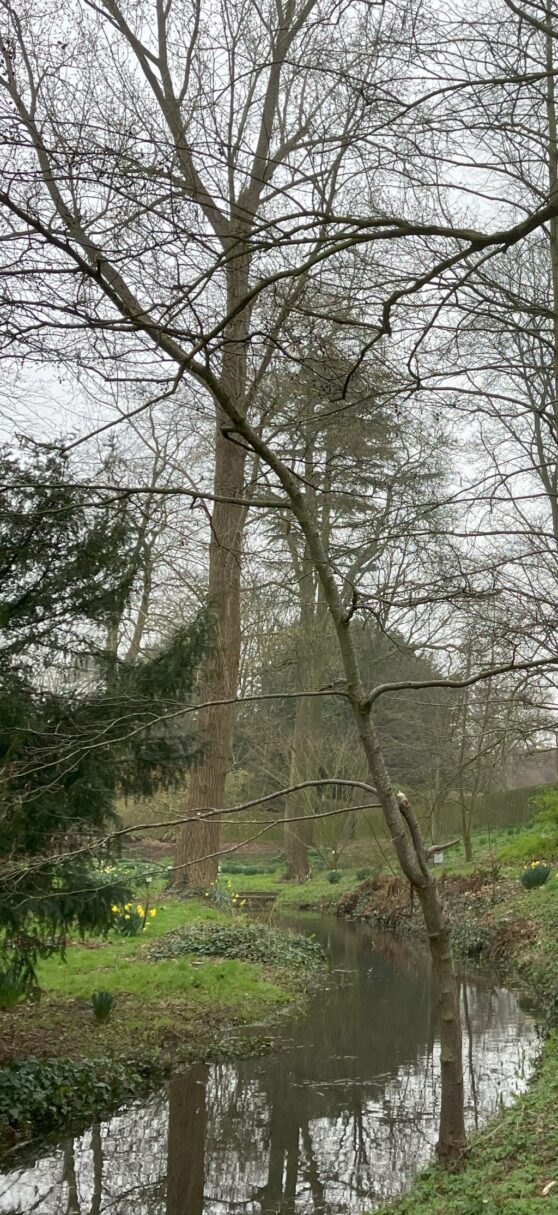
This tree can be found at the eastern end of the Moat Path, growing on the bank of the Moat.
| Other Common Names: | Black Alder, European Alder, European Black Alder, or just Alder, |
| Distribution: | Native to most of Europe (including the UK), southwest Asia and northern Africa. It thrives in wet locations where its association with the bacterium Frankia alni enables it to grow in poor quality soils. The common alder provides food and shelter for wildlife, with insects, lichens and fungi being completely dependent on the tree. It is a pioneer species, colonising vacant land and forming mixed forests as other trees appear in its wake. Eventually common alder dies out of woodlands because the seedlings need more light than is available on the forest floor. Its more usual habitat is forest edges, swamps and riverside corridors. |
| Planting Date: | Dec 1995 |
| Bought from: | ‘The Times’ special offer |
| Growth Habit: | A medium-sized, short-lived tree growing to a height of up to 30 m. |
| Bark: | The bark of young trees is smooth, glossy and greenish-brown while in older trees it is dark grey and fissured. The branches are smooth and somewhat sticky, being scattered with resinous warts. |
| Leaf: | Short-stalked rounded leaves |
| Flowers: | Separate male and female flowers in the form of catkins. |
| Fruit: | The small, rounded fruits are cone-like and the seeds are dispersed by wind and water. |
| Uses: | The timber has been used in underwater foundations and for manufacture of paper and fiber board, for smoking foods, for joinery, turning and carving. |
| Anecdotes and Comments | Products of the tree have been used in Folk remedies for various ailments. Research has shown that extracts of the seeds are active against pathogenic bacteria. Its scientific name is due to Joseph Gaertner, who in 1791 accepted the separation of alders from birches, and transferred the species to Alnus. The epithet glutinosa means “sticky”, referring particularly to the young shoots. |