#225 (Sh.25) THREE-FLOWERED ZABELIA
Zabelia Triflora
Planted: 1919
This shrub can be found in the Chinese and Japanese Section, near the Park Drive fence.
Previously known as Abelia triflora, Its other common names are Indian Abelia and Three-flowered Zabelia.
| Distribution: | Native to the northwest Himalayas. Including parts of Afghanistan, Pakistan, India, Nepal and China. In forest scrub and grassland. |
| Supplier: | Thomas Smith, Daisy Hill Nursery, Newry, Northern Ireland in January 1919. |
| Growth Habit: | Shrub to 12m |
| Bark: | Shoots with stiff curved hairs, becoming glabrous; older bark pale grey, fibrous. |
| Leaf: | Leaf blade ovate to lanceolate, 1.5 to 70mm × 5 to 20 mm, both surfaces glabrous but long hispid on margin and veins abaxially, base cuneate, margin entire to occasionally serrate or lobed, apex acute. |
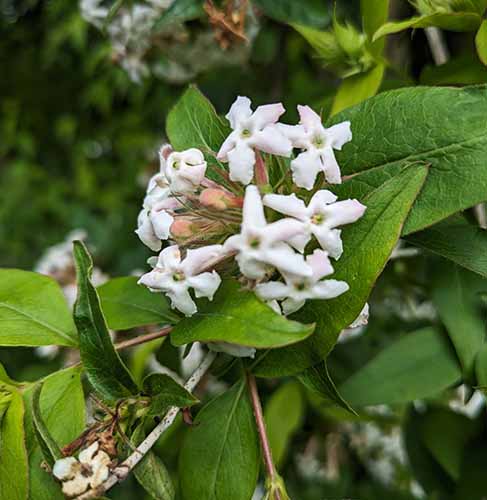
| Flowers: | it is one of the species with flowers densely grouped and strongly scented, and with five sepals and five lobes to the corolla. Flowers in May, with repeat flowering in August. |
| Fruit: | Fruiting June to August. |
| Toxicity: | Not known to be toxic to humans or pets. |
| Uses: | Grown principally for its delicious vanilla-scented blossom, though old plants with their gnarled, ash-grey, stringy bark can make eye-catching specimens, |
| Plant Hunter: | Not known |
| Introduction Date: | Introduced to the west of Ireland in 1847. It is fairly hardy, but thrives best in mild coastal parts of the British Isles. |
| Anecdotes and Comments | This specimen is mentioned in the article: Johnson, O. (2021), ‘Zabelia triflora’ on the website: Trees and Shrubs Online ‘In the harsher climate of the English Midlands, an example planted in 1919 by Francis Hammond in his garden in Market Harborough, now maintained by the Robert Smyth Academy as the Hammond Arboretum, was a relatively modest four-metre bush in June 2009, when the heady scent of its white blossom filled the collection.’ |