#219 (Sh.19) WAYFARING TREE
Viburnum lantana
Planted: 1933
This shrub is at the east end of the Central Path
Purchased from Hillier Nurseries, Romsey, Hampshire.
Native to central, southern andwestern Europe (north to Yorkshire in England), northwest Africa and southwestern Asia.
Common in hedgerows and along waysides.
The fruit is of low to zero toxicity, but may cause vomiting or diarrhea if consumed unripe or in large quantities.
A deciduous shrub or small tree growing to 4 to 5 m tall.
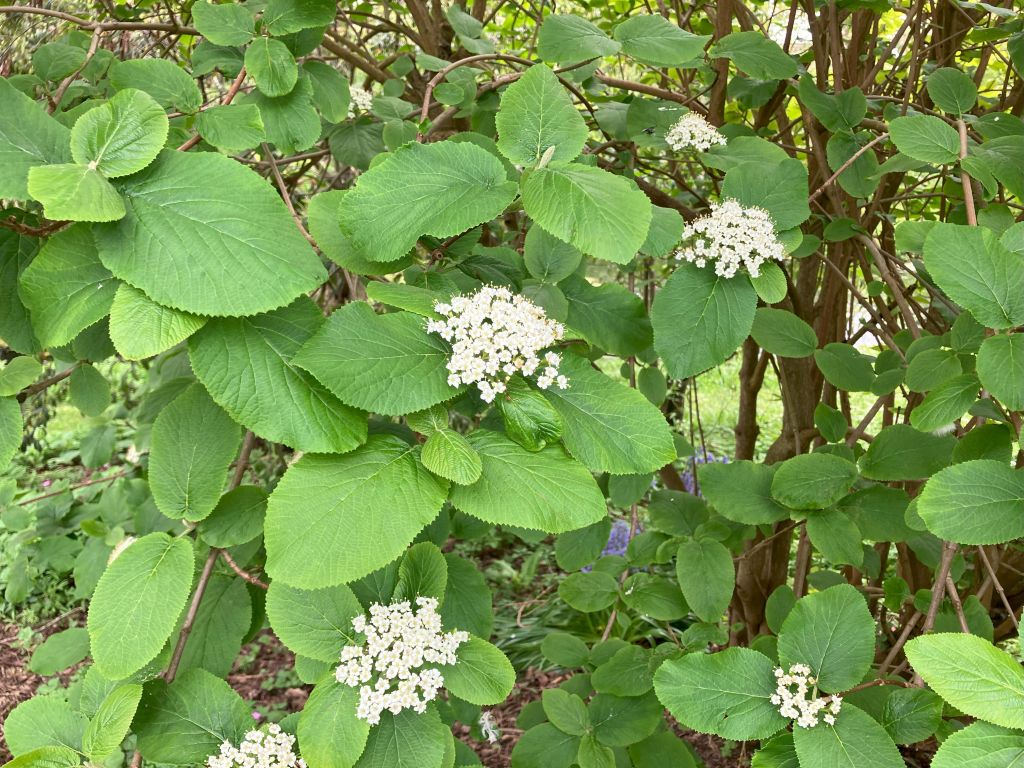
Leaves are opposite, simple oval to lanceolate, 6 to 13 cm long and 4 to 9 cm wide. A finely serrated margin and densely downy on the underside, but less so on the upper surface.
The flowers are small, around 5 mm, and creamy-white. Produced in dense cymes 4 to 10 cm wide, on stems, in early summer. Pollinated by insects.
The fruit is an oblong drupe, 8 mm long. Green at first, turning red, then finally black at full maturity. Each contains a single seed. Which are dispersed when birds eat the fruit and deposit the seeds in their droppings.
An older name for the plant is hoarwithy. “hoar” means grey-haired and refers to the hairs under the leaves, and “withy” means a pliant stem.
Often grown as an ornamental plant for its flowers and berries.